
%203.avif)
%201.avif)


How brand alignment transformed a property investment startup challenging the notion that Brand development is centred around visuals.
Most people think brand transformation means a new logo, fresh colours, perhaps a website redesign. It doesn't, in reality - this is a fraction of a businesses ‘brand’.
So what is Brand?
Brand is the system that connects how a business presents itself to the market with a strong correlation to how it performs commercially. When that system breaks down, growth stalls, regardless of how good the product is, how experienced the team, or how much you spend on marketing.
This is the case study of a property investment company that had everything going for it except coherence. And how rebuilding their brand system (not their visual identity) took them from struggling startup to £40M revenue in 18 months.
The founders between them secured over £5bn in investment across their careers. They had the expertise, track record, and the numbers to prove their service offering. Their model was based on what had worked before - for established property investment firms.
Operating costs would sustain them for a year. The product was solid: competitive returns from one of the most stable investment asset classes during economic uncertainty. The property market.
On paper, everything made sense.
In practice, after three months of marketing spend, the results were poor. Leads weren't converting and the sales team was frustrated. Budget was draining on marketing spend through a broken system which clearly wasn’t working.
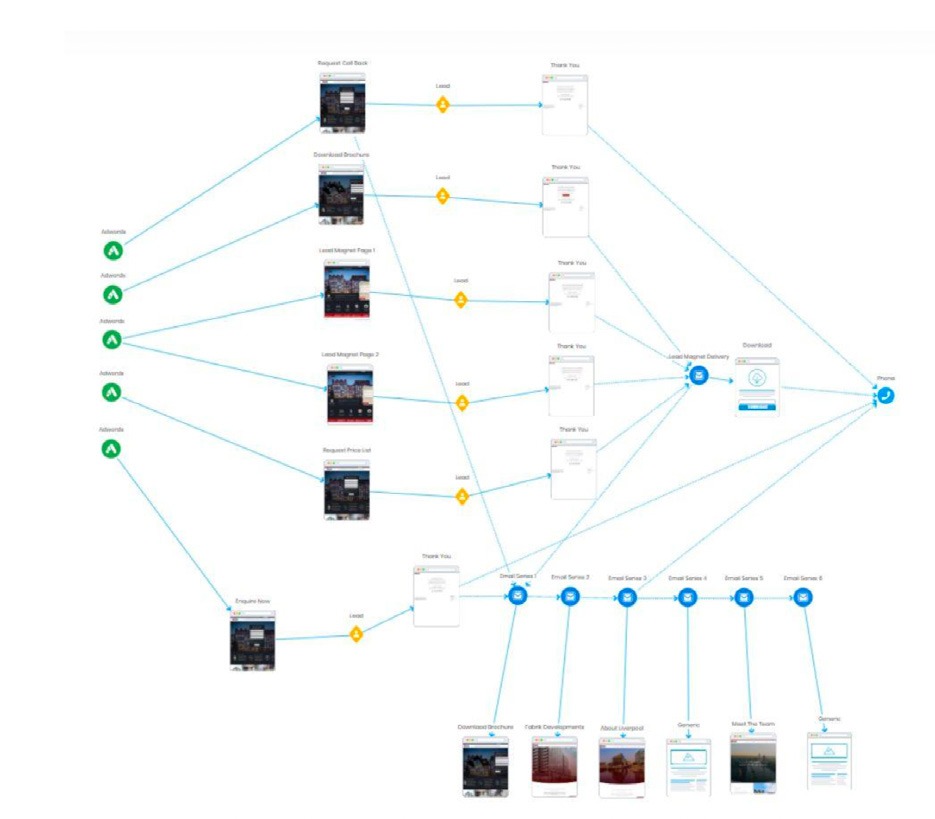
When we came in, the first thing we did was map out their marketing and sales function to understand their operational structure.
What we found was a fragmented brand experience hidden as a marketing problem.
The old model looked like this:
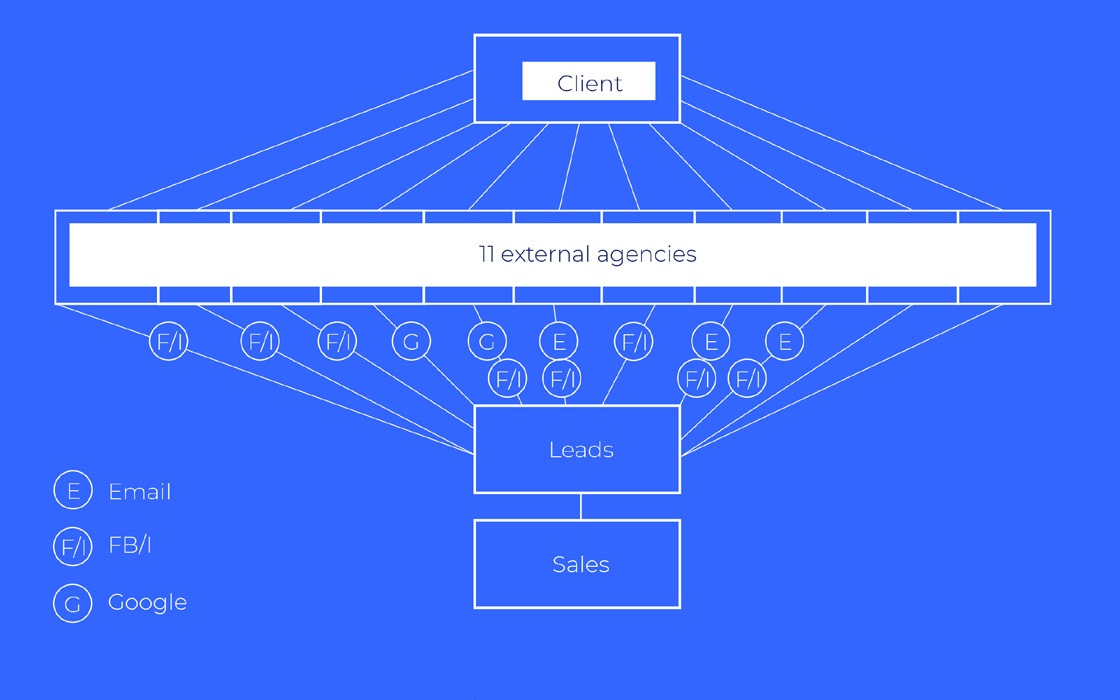
Eleven external agencies running lead generation campaigns. Each agency operated autonomously - choosing their own creative, their own messaging, their own targeting. The client allocated budget and products; the agencies delivered leads.
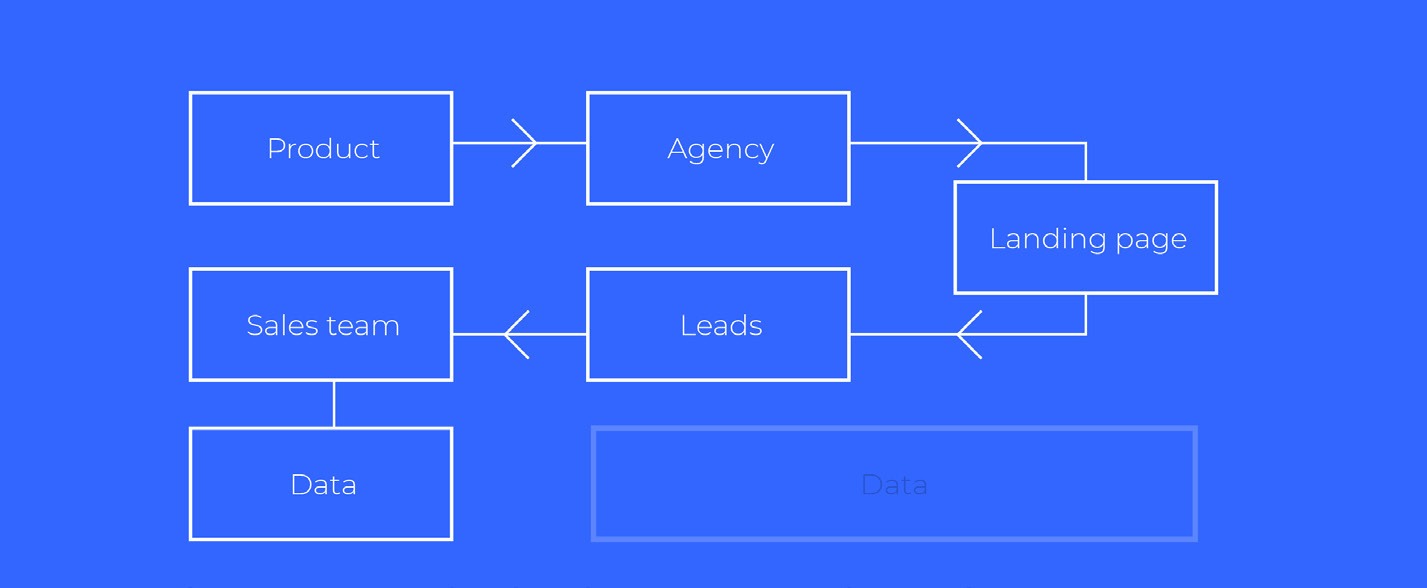
The issues were structural:
On the surface this seemed like a marketing problem, but a deeper dive It was a brand coherence problem.
The company was presenting multiple fragmented brand activation tactics, all communicating different positioning across the market. Prospects encountered one version of the brand in an ad, another on a landing page, another in a sales call. Trust couldn't build because there was nothing consistent to trust.
The new to market brand was looking like a generalised service offering.
We didn't redesign their logo. We rebuilt how their brand functioned as an operational system.
The first change was architectural. We replaced the fragmented agency model with a centralised directives system.
The new structure operated across three functions:
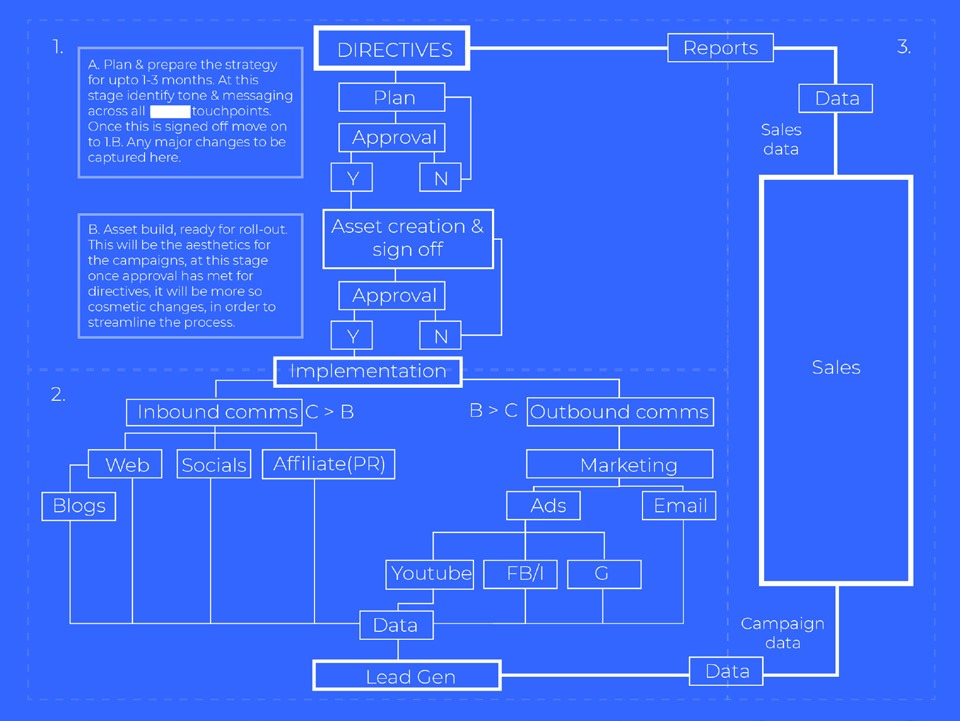
This created clear ownership. Marketing and sales were no longer separate departments lobbing leads over a wall. They became a single system with shared metrics and shared accountability.
Variables could now be tested effectively. When something worked, we knew why. When something failed, it provided strong learning.
This was the environment this new-to-market entity needed to create.
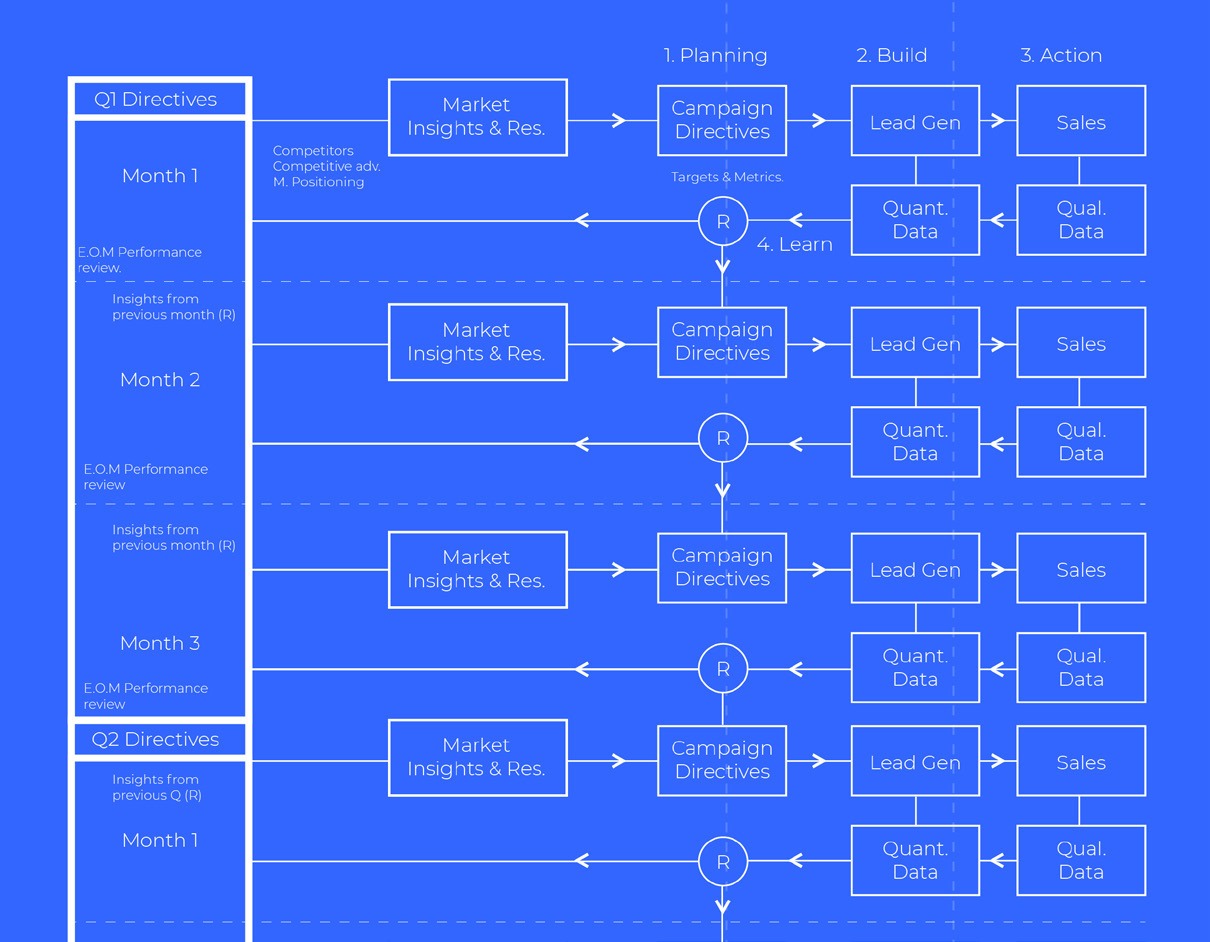
We designed a campaign deployment model built around what I call "degree of certainty."
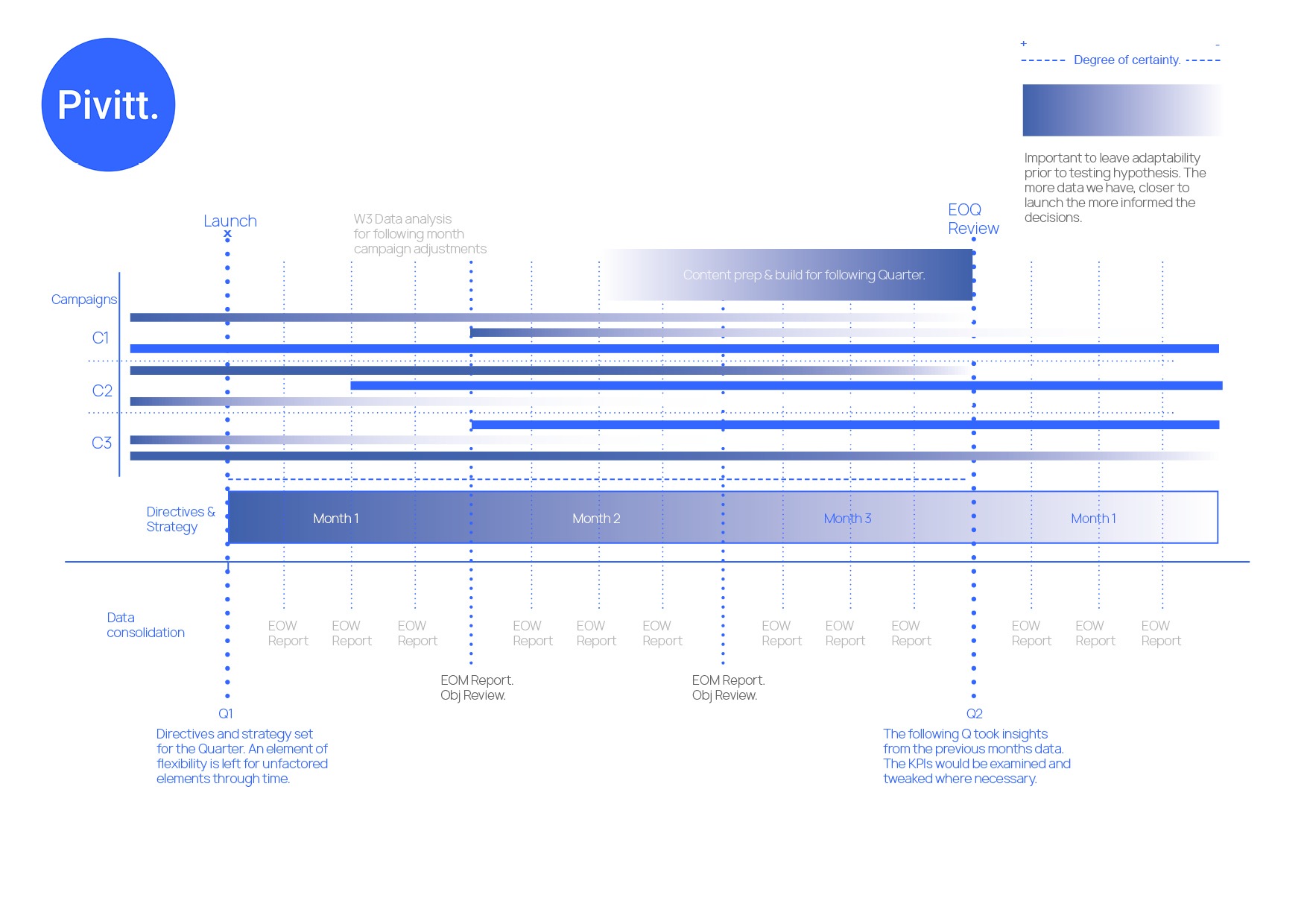
Campaigns operated in quarterly cycles:
Each cycle fed into the next. The more data we collected, the more informed the decisions became. This wasn't "set and forget" marketing, that approach would not work especially considering their customer base - ‘savvy investors’. The team needed a brand system that was designed to get smarter over time, learning from market insights.
Targets were set for each stage of the funnel, from cost-per-click at the top through to cost-per-acquisition at the bottom.
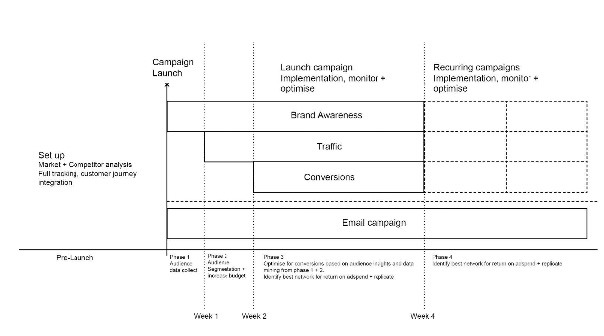
We built three campaign tiers that worked together:
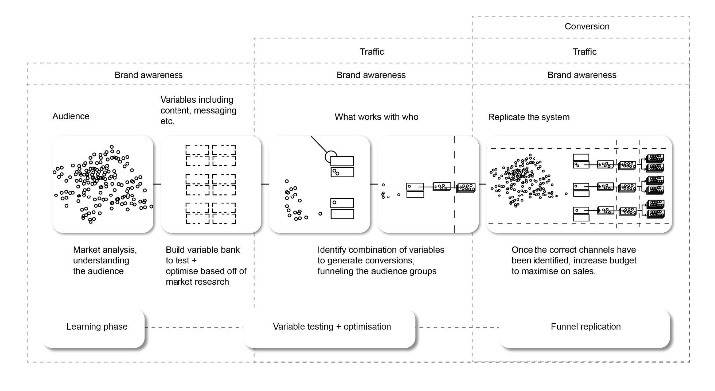
Brand Awareness: Data collection. Learning which audiences responded to what. Letting the algorithms find patterns before we imposed our assumptions.
Traffic: Optimisation and retargeting based on what we learned in phase one. Building segments, identifying what messaging worked with whom.
Conversion: Targeting refined audiences with tailored messaging. Building lookalike campaigns from the highest-performing sequences.
The key insight: we didn't start with conversion campaigns. We started with data collection from the right pool of people. The brand needed to understand and learn of its audience’s challenges & skepticisms before it could speak to them coherently.
Prior to this system, content was reactive. Created ad hoc, approved by whoever happened to be available, inconsistent in message and tone.
We implemented a structured production system:
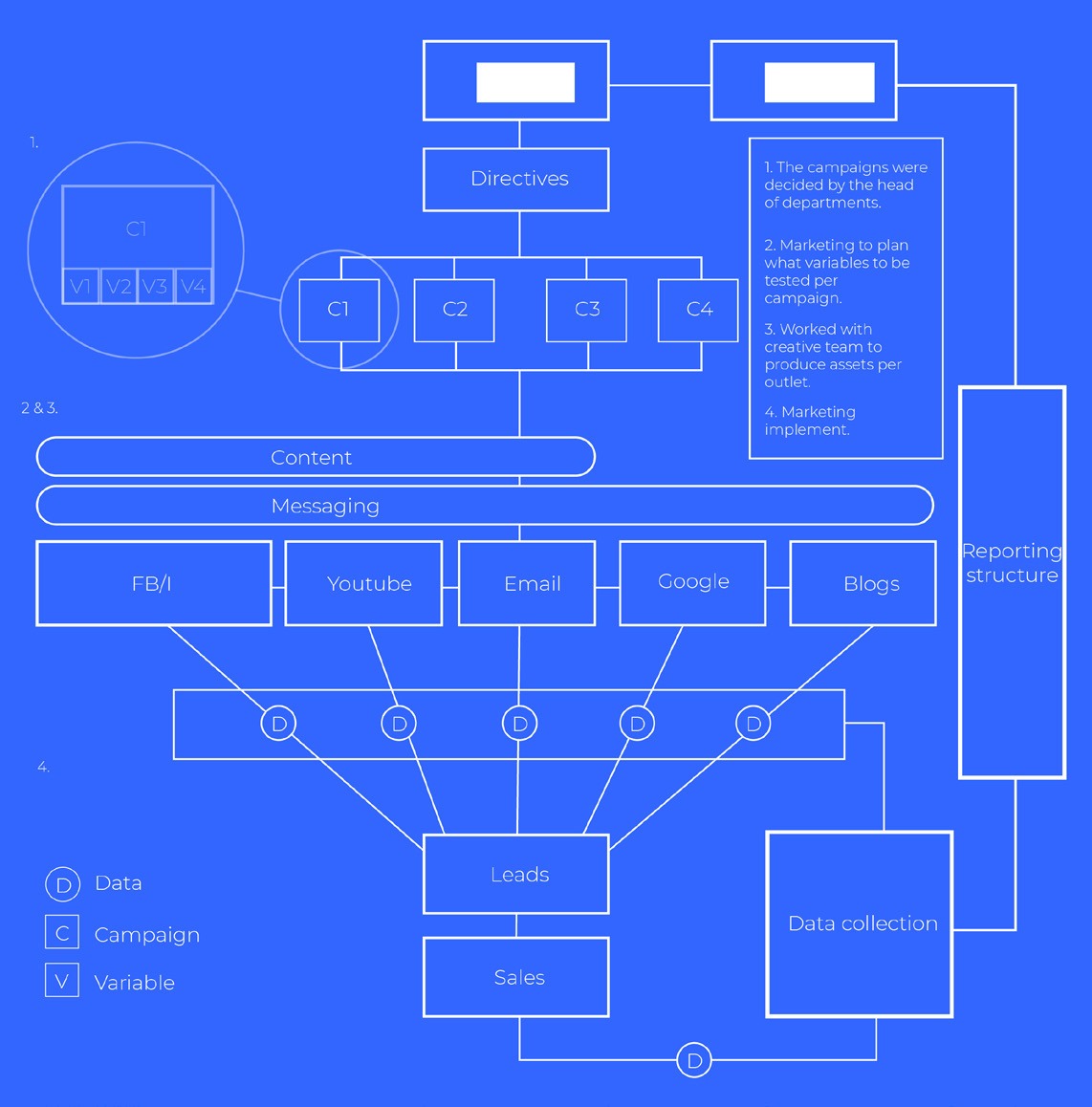
This eliminated bottlenecks. More importantly, it meant the brand spoke with one voice across every touchpoint.
This created familiarity with the Brand.
The final piece was connecting marketing activity to sales outcomes.
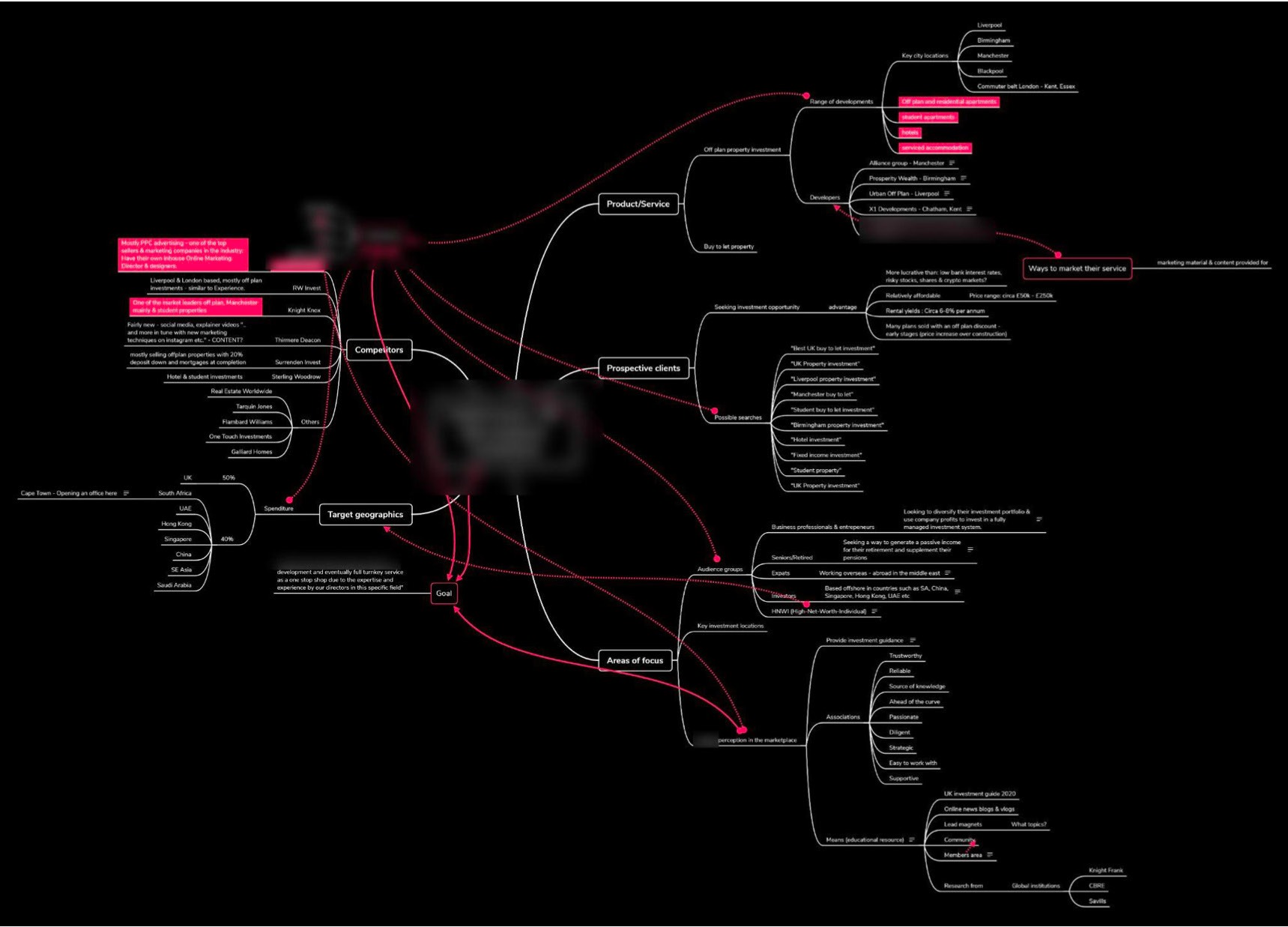
We mapped the full customer journey from first ad impression through to closed deal, and identified where the brand experience broke down. The sales team was brought into campaign planning. Marketing received feedback on lead quality and conversion patterns.
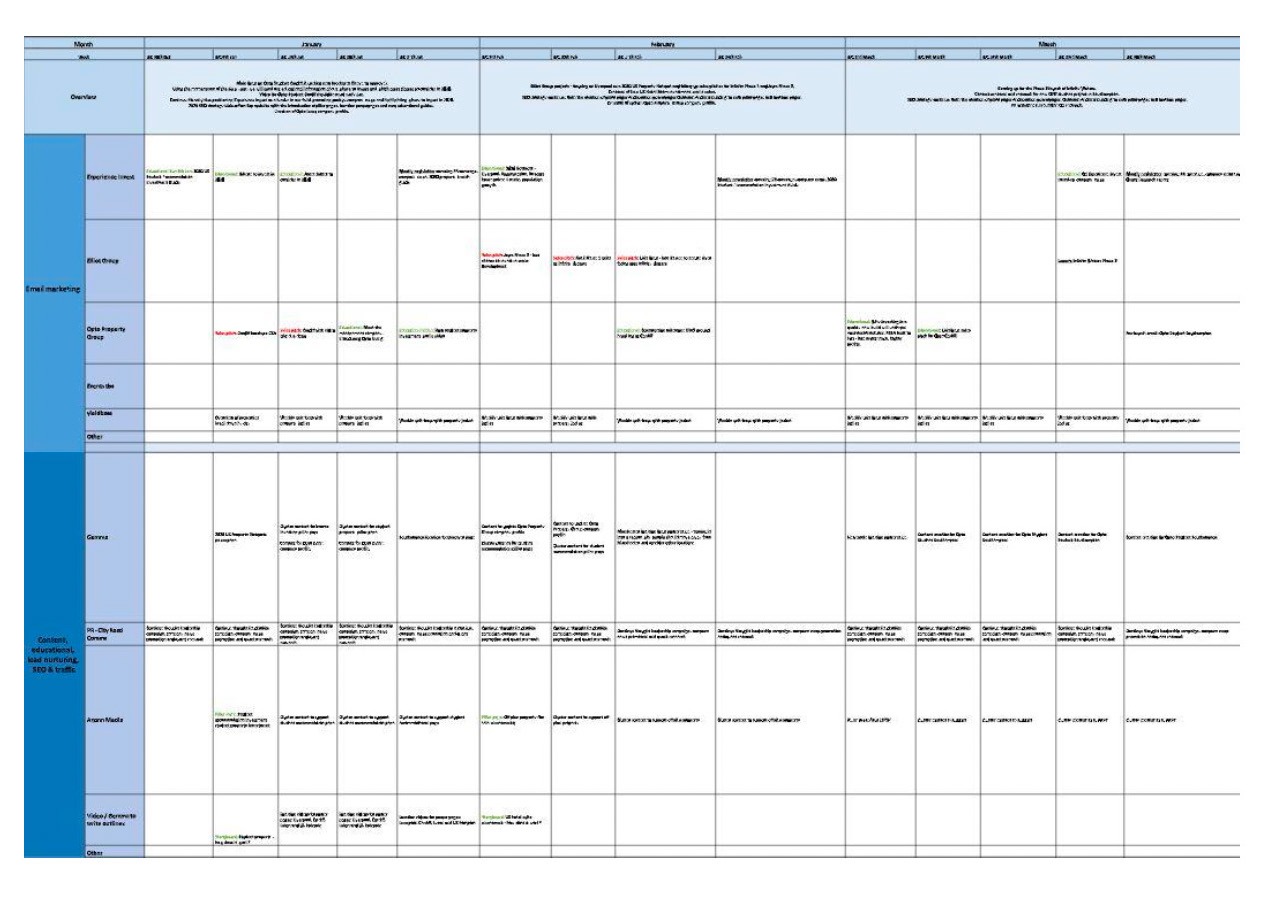
The result was a feedback loop: what the market responded to informed how the sales team positioned. How the sales team converted informed what marketing created next.
Early analysis revealed the company had been focusing on the wrong tactics.
Their previous strategy focused on the bottom of the funnel - people already searching for their specific product. The search volume there was around 20 queries per month.
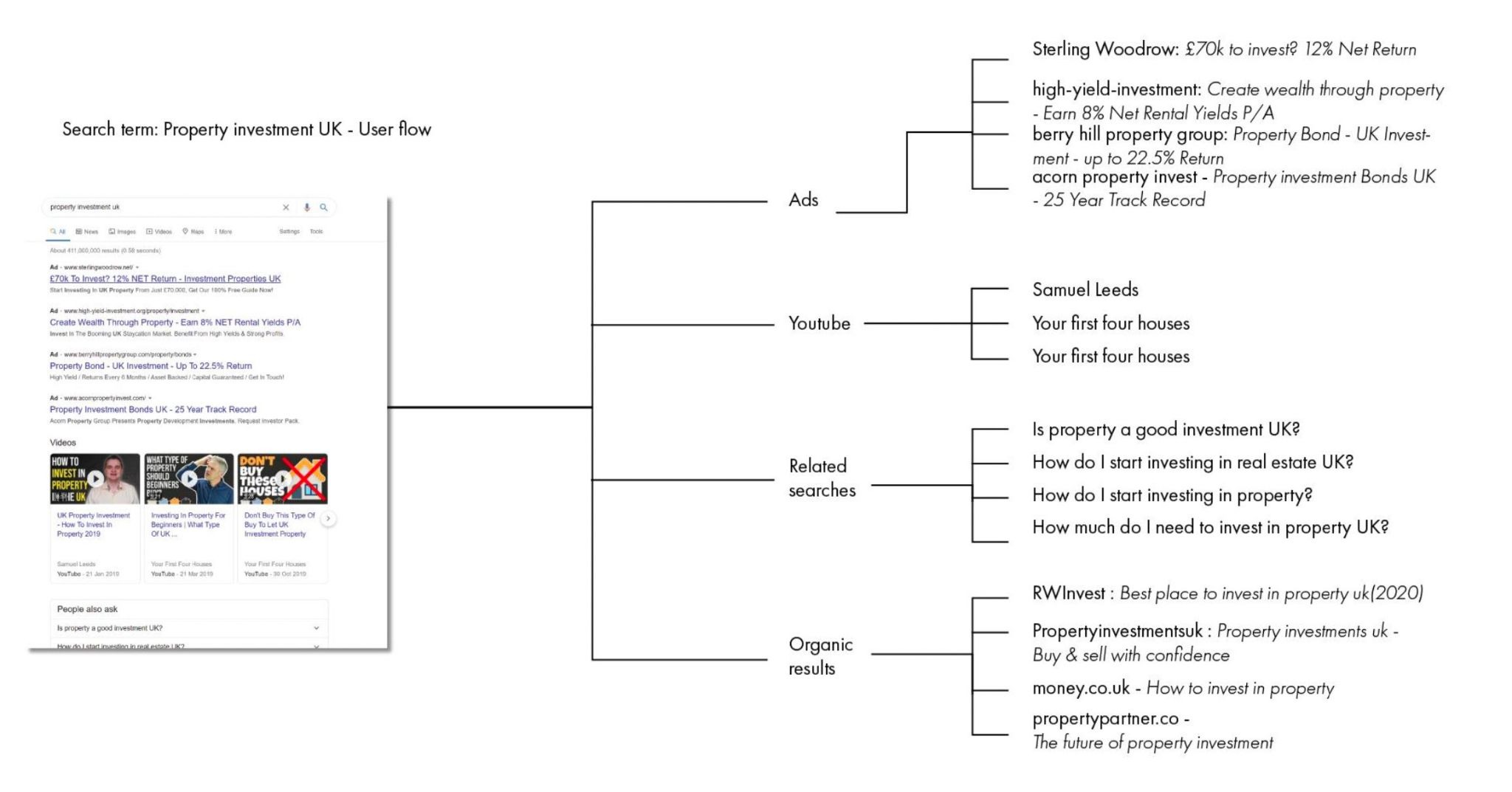
The top of the funnel, people searching for "property investment UK" - had over 3,500 monthly searches.
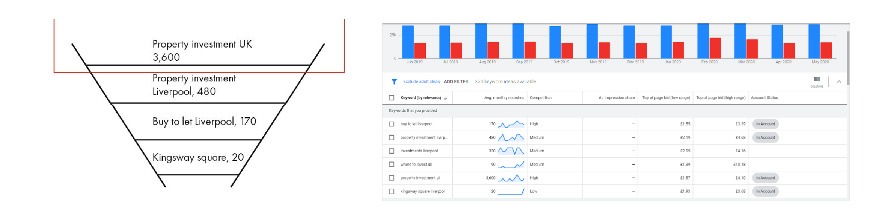
By repositioning the brand to capture earlier-stage interest and nurture it through a coherent journey, we opened up a market 175 times larger than what they'd been targeting.
We built landing pages, lead magnets, email sequences, all designed to educate first, sell second. The brand became a trusted guide for property investment, not just another company pushing products.
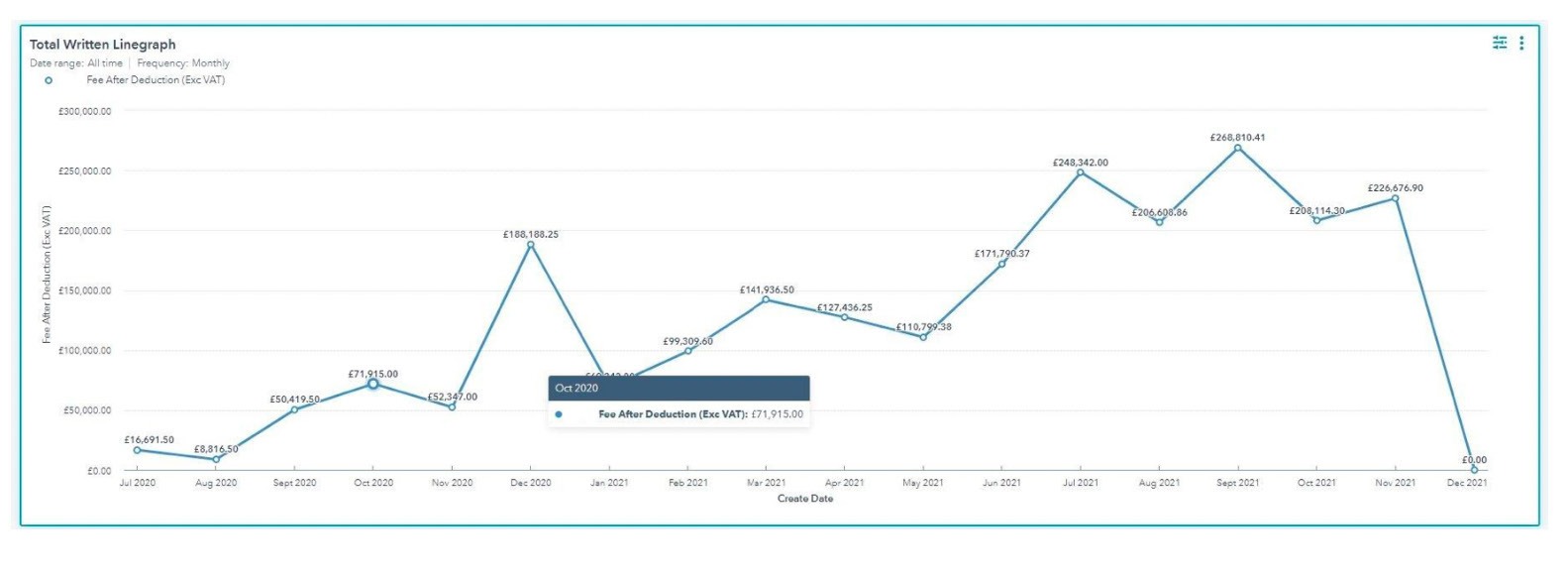
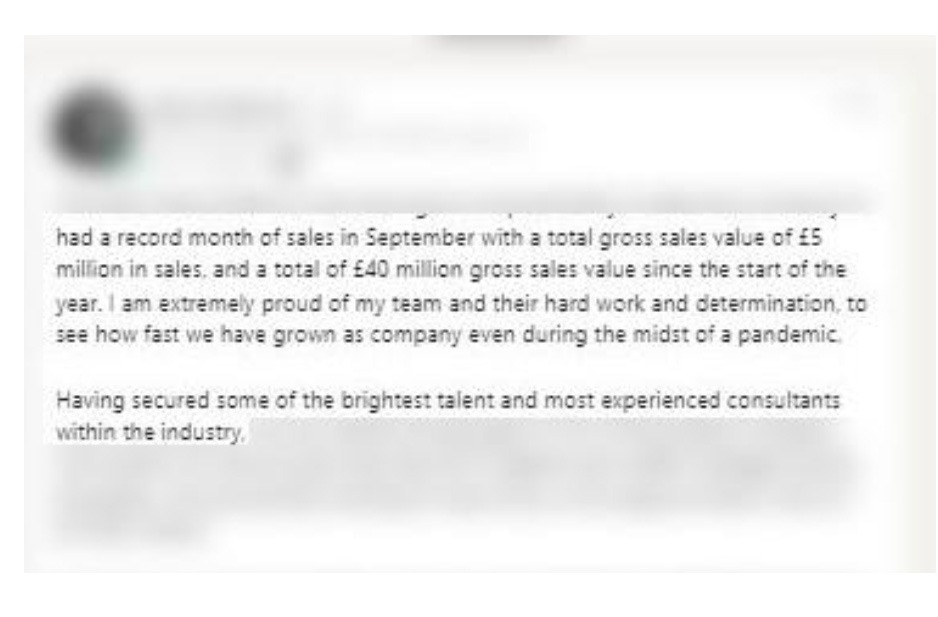
From July 2020 through November 2021, the company scaled to over £40 million in gross sales value.
Their best month hit £5 million. A record driven not by more spend, but by a system that converted more efficiently at every stage.
Brand isn't what you look like. It's the system that determines how you show up - consistently, coherently, across every touchpoint where a customer encounters you.
When that system is fragmented, it doesn't matter how good your product is or how experienced your team. The market can't build trust with something that keeps shifting.
When that system is aligned, everything compounds. Marketing becomes more efficient. Sales conversations start warmer. Customers arrive already understanding who you are and what you stand for.
This company didn't need a rebrand. They needed their brand to function as a system.
That's what drove £40M. Not a logo.
If your business has outgrown how it presents itself - or you suspect misalignment between how you market and how you sell - Cick here & let's talk about what a brand system audit might reveal.

Stay ahead of the curve with our latest articles, research and commentaries on the ever-envolving art and science of brand building


.jpg)


